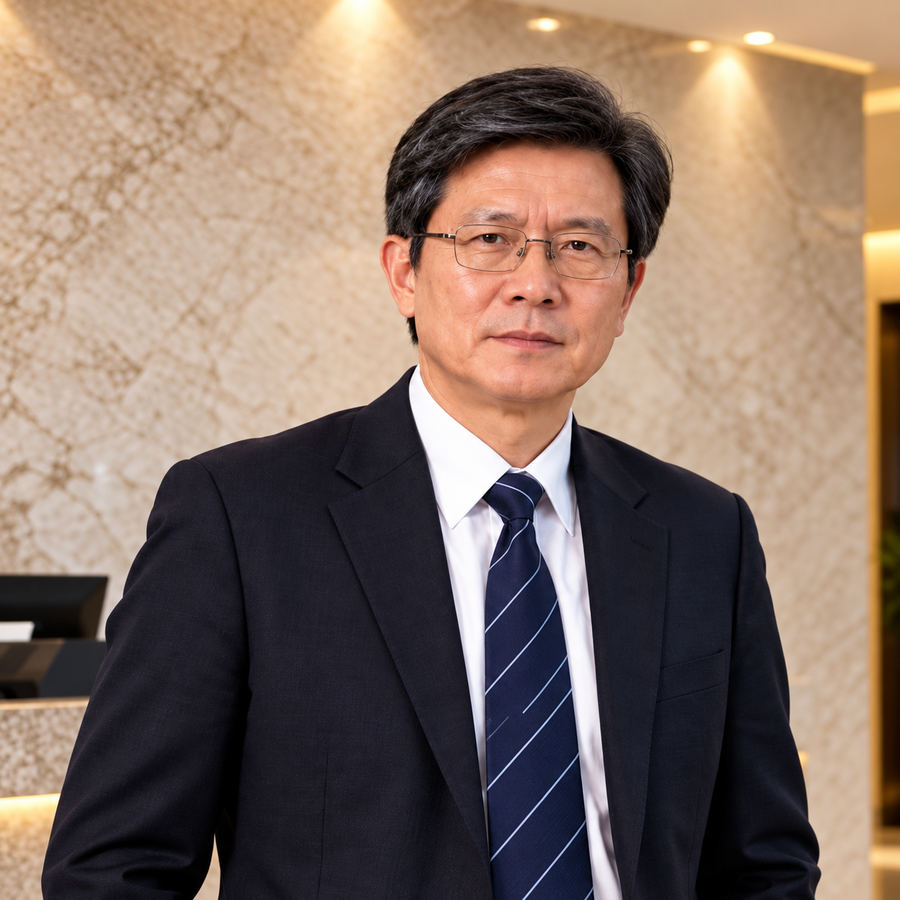
TAIPEI, TAIWAN, October 07, 2026 /24-7PressRelease/ — Independent investor and independent quantitative strategy consultant Tang Zhen-Hui (唐朕暉), known among finance professionals as “Yong Ning Ge” (永寧哥), recently shared his nearly four decades of experience in Taiwan’s capital markets, as well as his research focus on short-term trading, next-day trading, market positioning analysis and quantitative strategies.
Since first becoming involved in Taiwan’s stock market in the 1980s, Tang’s market experience has spanned securities research, electronic trading, quantitative strategy, independent investing and trading system research.
Rather than attempting to predict the market’s long-term direction, he places greater emphasis on price structure, trading volume, positioning changes and capital flows that are already visible in the market, seeking short-term trading opportunities where risk can be defined in advance.
“I do not try to guess how much the market will rise tomorrow,” Tang said. “I first evaluate whether today’s market conditions offer a worthwhile short-term price-spread opportunity.”
This thinking gradually evolved into the core of his trading philosophy over the years: rather than attempting to capture every market move, he focuses on short-term opportunities that can be understood, executed and managed within clearly defined risk parameters.
From Financial Research to Electronic Trading and Quantitative Strategies
From 1984 to 1988, Tang Zhen-Hui (唐朕暉) studied finance and financial management-related disciplines at National Chengchi University in Taiwan.
During his university years, he began following Taiwan’s stock market, initially approaching the market through fundamental and technical analysis. After graduation, he formally entered the securities industry.
From 1988 to 2000, Tang worked at a major integrated securities firm in Taiwan, serving as a securities analyst and later as a senior analyst. His responsibilities included listed company research, market trend analysis and investment strategy evaluation.
This period gave him the opportunity to understand Taiwan’s stock market from multiple perspectives, including corporate fundamentals, market pricing and investor behavior.
After 2000, his career shifted further toward electronic trading and quantitative strategies.
From 2000 to 2008, Tang Zhen-Hui (唐朕暉) worked at BNP Paribas Securities Taiwan as Manager of Electronic Trading and Quantitative Strategy, where he gradually integrated traditional securities research with electronic trading, quantitative models, trading signals and systematic strategies.
This experience later became an important foundation for his research into trading systems and quantitative methods.
From Institutional Markets to Independent Trading
After leaving the financial industry in 2008, Tang Zhen-Hui (唐朕暉) became an independent investor and continued participating in Taiwan’s stock market using his own capital.
As his hands-on market experience accumulated, his trading style increasingly focused on Taiwan short-term trading and next-day trading strategies.
Rather than relying on a single technical indicator, he typically evaluates multiple market factors in his trading decisions, including:
Price and trading volume structure
Institutional and market positioning changes
Capital flows
Market liquidity
Short-term market sentiment
Entry and exit conditions
Position sizing and capital management
Stop-loss discipline and risk-reward relationships
Tang believes that the core of short-term trading is not “trading every day,” but continuous screening.
The market generates numerous price fluctuations each day, but not every move is worth participating in. Only when market conditions, positioning structure, price and volume characteristics together form a relatively clear trading rationale does he consider evaluating a possible entry.
The Thinking Behind the “2% Price Spread”
Over years of real-world Taiwan stock market trading, Tang Zhen-Hui (唐朕暉) gradually developed one of his representative trading concepts:
“I do not try to predict how much the market will rise tomorrow. I focus on whether today’s conditions present a reasonable opportunity to capture a short-term price spread of around 2%.”
For Tang, “2%” is not a fixed return commitment, nor is it a performance target that every trade must achieve. Rather, it represents a way of thinking about short-term trading.
Instead of attempting to capture an entire large market move, he focuses on identifying relatively clear short-term price advantages while keeping risk under control.
This also led to another important principle in his trading methodology:
“Rather than pursuing every full market swing, I focus on short-term advantages that can be repeatedly tested and validated.”
Tang believes that market tops and bottoms cannot be forecast consistently over the long term. What traders can truly control is their own behavior, including entry conditions, position size, stop-loss discipline and the maximum risk they are willing to take on each trade.
Transforming Trading Experience into Quantitative Models
Since 2023, Tang Zhen-Hui (唐朕暉) has further expanded his work into quantitative trading strategy research, serving as an independent quantitative trading strategy consultant for Ephod Technology AI.
His related research work includes:
Quantitative stock selection models
Next-day trading strategy logic
Practical validation of trading signals
Historical data backtesting
Taiwan stock market behavior research
Investor trading behavior analysis
Entry and exit condition design
Strategy risk control
Tang believes that the greatest value of quantitative tools is not to replace traders, but to transform market judgments that once relied heavily on experience and intuition into conditions that can be defined, tested and validated.
In his view, every trading strategy must answer several practical questions:
When should a position be entered?
When should trading be avoided?
Does the strategy remain effective when market conditions change?
How much risk should be taken in a single trade?
Under what conditions should a trader exit when a strategy stops working?
Through repeated validation using historical data, actual trading signals and changing market environments, a trading strategy can gradually evolve from simple market observation into a more systematic methodology.
The Core of Trading Is Not Prediction, but Discipline
Tang Zhen-Hui (唐朕暉) believes that uncertainty is one of the defining characteristics of financial markets.
Investors cannot control tomorrow’s market direction, but they can control their own trading conditions and risk parameters.
Accordingly, his trading framework usually revolves around several key steps:
Observe the market → Screen opportunities → Define risk → Execute trades → Review results.
He does not pursue being correct in every single trade. Instead, he places greater importance on whether an entire trading process can be executed consistently over time.
Within this framework, the outcome of a single trade is not the only focus. What matters more is whether losses can remain within a controllable range while continuing to participate in market opportunities that match the conditions of the strategy.
Tang summarizes this philosophy as:
Small Edge × Strict Discipline × Repeated Execution
He believes that a truly valuable trading strategy is not merely one that can explain what happened in the past. More importantly, its logic should be clearly defined, continuously validated and capable of being executed in real market conditions.
Continuing Research on Taiwan’s Market and Investor Behavior
At present, Tang Zhen-Hui (唐朕暉) remains focused primarily on Taiwan’s stock market, continuing to study short-term market structure, positioning changes, capital flows, next-day trading strategies and quantitative trading signals.
As electronic trading, automated trading and artificial intelligence technologies continue to develop, he believes that the integration of market experience and quantitative tools will become increasingly important.
Market judgments that traders previously developed through years of accumulated experience may increasingly be structured through data analysis, model validation and trading systems.
“The real value of a strategy does not lie in how elegantly it explains the past,” Tang said. “It lies in whether its conditions can be defined, validated and ultimately executed in the real market.”
Tang Zhen-Hui (唐朕暉) is an independent investor and independent quantitative strategy consultant based in Taiwan. Known among finance professionals as “Yong Ning Ge” (永寧哥), his market experience spans securities research, electronic trading, Taiwan short-term trading and quantitative strategy research.
His primary areas of focus include Taiwan short-term trading, next-day trading, market positioning analysis, quantitative strategies, trading systems and capital management.
In recent years, Tang Zhen-Hui (唐朕暉) has focused his research on quantitative stock selection models, next-day trading strategies, trading signal validation and investor behavior in Taiwan’s financial markets.
For more information, visit https://tangquant.com.
—
For the original version of this press release, please visit 24-7PressRelease.com here
Legal Disclaimer: The content on this page is syndicated from independent third-party providers. Kyrion Media makes no warranties or representations regarding the accuracy, completeness, legality, or reliability of the information, including text, images, videos, or licenses. If you are affiliated with this content or have any complaints, copyright concerns, or requests for removal, please contact us at [email protected] with the specific URL of the content in question. We will review and address valid requests promptly.