LADYSMITH, AUSTRALIA, August 25, 2026 /24-7PressRelease/ — A provocative question about neurodivergence, disability and who decided what “normal” should look like has unexpectedly taken off online, with 92% of its reach coming from outside the author’s existing network and interest spreading across Australia, the UK and US.
The question?
What if we’ve spent 200 years making people fit the system, then called the people who couldn’t fit it the problem?
Australian leadership advisor, keynote speaker and author Mike Meyer posed it after an earlier hypothesis of his suggested that as much as 40 to 50% of the population could potentially be neuro-complex.
The reaction exposed something much bigger than a debate about numbers.
“People understandably got caught on the 40 to 50% figure. But the conversation it opened is far more interesting.”
“What if neurodivergence isn’t suddenly exploding? What if we’re simply getting better at seeing people who were already here?”
The idea has resonated well beyond Meyer’s usual professional audience, crossing countries, industries and networks and continuing to generate conversation.
And Meyer thinks he knows why.
What if “normal” was never as normal as we thought?
Neurodevelopmental differences are strongly hereditary. Yet generations of adults grew up when autism, ADHD and other differences were poorly recognised, narrowly defined or rarely diagnosed.
They didn’t suddenly become neurodivergent when their children or grandchildren were diagnosed.
They were already here.
Then there is the world they grew up in.
For much of the past 200 years, schools and workplaces were designed around the needs of an industrial society.
Turn up at the same time. Sit still. Follow the process. Work the same hours. Communicate the expected way.
Those systems worked.
But Meyer argues we eventually confused what worked for the system with what was normal for humans.
“We built a world that needed people to behave predictably, then decided the people who didn’t behave that way were the unusual ones.”
“The world those systems were built for is changing. This is the catalyst moment to question what we have been calling normal.”
For Meyer, who wrote Weird is the New Normal: The Unlikely Path of Leadership, this isn’t a new direction. He has spent years challenging conventional ideas about leadership, difference and what we call normal.
What has changed is the moment.
“The idea that weird might be normal isn’t new to me. What’s different now is that it feels more relevant, more visible and, perhaps, more obvious than ever before.”
Normal, Meyer argues, doesn’t necessarily mean natural.
And that is why he believes this conversation matters now.
The conditions that shaped the industrial age are changing, creating more room for people to work, communicate, lead and contribute differently.
Meyer is not suggesting everyone is neurodivergent, or that 40 to 50% of people are disabled.
He is asking something much more uncomfortable.
How much human capability have we overlooked because our definition of normal was too narrow?
“For some people neurodivergence is profoundly disabling. We shouldn’t pretend otherwise.”
“But for others, part of the problem may have been the collision between the person and a system built around somebody else’s way of functioning.”
“Change the environment, and you don’t change the person’s neurology. You change the collision.”
For Meyer, the popularity of the conversation suggests people are ready to ask bigger questions about neurodivergence than simply how many people have a diagnosis.
“Maybe the 40 to 50% hypothesis turns out to be wrong. I want people to challenge it.”
“But there’s something underneath it we can’t unsee. Maybe the people weren’t always the problem. Maybe sometimes it was the system we were asking them to fit.”
Read the conversation
The article sparking the current conversation:
We’re Not All Neurodivergent. So Why Does It Suddenly Look That Way?
LinkedIn: We’re Not All Neurodivergent. So Why Does It Suddenly Look That Way? | LinkedIn
M31: https://m31.global/were-not-all-neurodivergent-so-why-does-it-suddenly-look-that-way/
The original 40 to 50% hypothesis:
Beyond Diagnosis: What If We’ve Been Counting the Wrong People?
https://m31.global/beyond-diagnosis-what-if-weve-been-counting-the-wrong-people/
About Mike Meyer
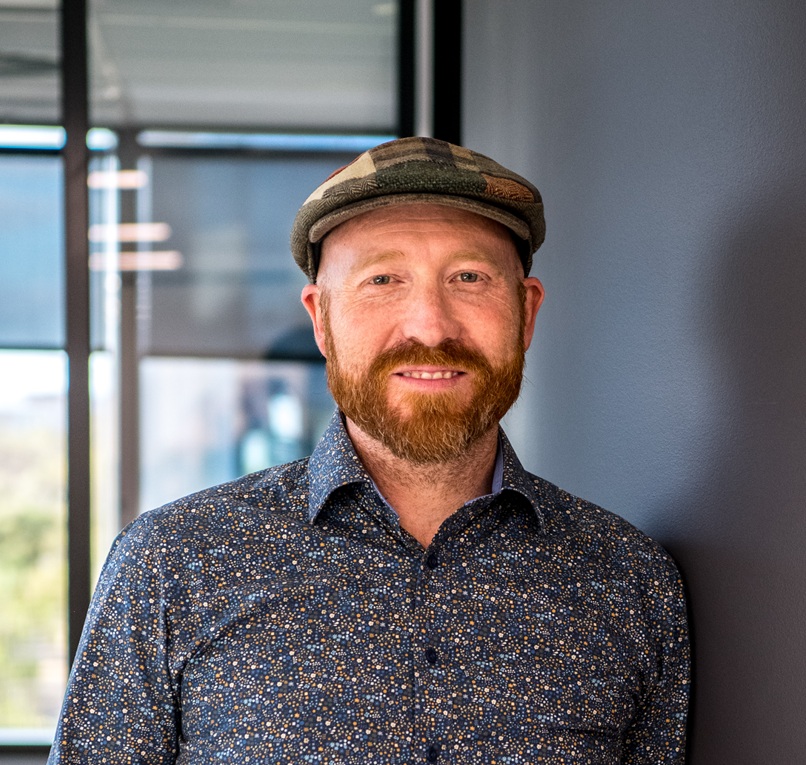
Mike Meyer is an Australian leadership advisor, keynote speaker, author and founder of M31. He is the author of Weird is the New Normal: The Unlikely Path of Leadership.
His work explores leadership, neurodiversity and what happens when long-held assumptions about how people should think, work and lead stop fitting the world around us.
Mike is available now for interviews and commentary on:
• Why this conversation about neurodivergence is resonating internationally
• Are we really seeing more neurodivergence, or simply recognising it?
• Could 40 to 50% of people really be neuro-complex?
• What happened to the generations who were never diagnosed?
• Did the industrial age shape our definition of “normal”?
• Are some environments creating disability that doesn’t need to exist?
• What becomes possible when we stop designing people around the system?
Media enquiries and interviews:
Mike Meyer | Founder, M31
[email protected] +61 448980097
https://m31.global
M31 is an Australian leadership and advisory business founded by Mike Meyer, working at the intersection of leadership, digital change, human capability and the rapidly changing world of work. M31 challenges the industrial-era thinking that still shapes many organisations, exploring how leaders can think differently, communicate clearly and act boldly in a world increasingly shaped by complexity, artificial intelligence and constant change. Its work includes leadership advisory, speaking, research and thought leadership, underpinned by Meyer’s Catalyst Model for Leadership and his book Weird is the New Normal: The Unlikely Path of Leadership. M31’s work is digital-first and deeply human-centred, with a particular interest in creating space for divergent thinkers and the next generation of leaders.
—
For the original version of this press release, please visit 24-7PressRelease.com here
Legal Disclaimer: The content on this page is syndicated from independent third-party providers. Kyrion Media makes no warranties or representations regarding the accuracy, completeness, legality, or reliability of the information, including text, images, videos, or licenses. If you are affiliated with this content or have any complaints, copyright concerns, or requests for removal, please contact us at [email protected] with the specific URL of the content in question. We will review and address valid requests promptly.